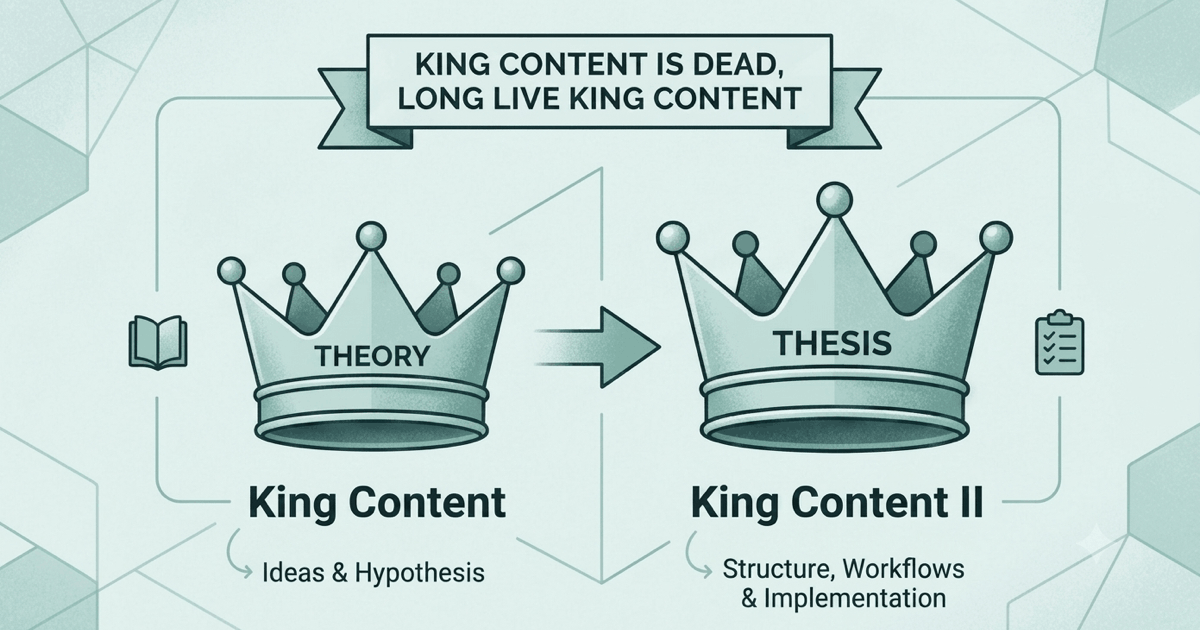
King Content lived a life of theory, hypothesis, and analysis, and died to live a life of thesis. Long live King Content II.
Ideas are perfect until they meet reality and adjustments must be made as Plan B or C (OK, more like Plan K-L-M-N-O-P). The exact same thing happened to me while writing Content is King. While the theory made perfect sense on paper, in practice it required real-world adjustments to become a thesis. In this field note, I will review what actually worked to keep my focus solely on content while moving the plumbing code aside.
Plumbing Code
The most significant architectural shift was replacing Quartz with Hugo and the Stack theme. For my specific use case, Hugo is simply a better-matched SSG, allowing me to minimize additions and extensions to the codebase.
Write > Preview > Publish > Read
The second major adjustment to the plumbing code was the forgotten step of previewing the website before publishing. I needed a way to review the look, feel, and theme of the website before publishing it live, rather than debugging it after the fact. To achieve this, I used Process Compose as a lightweight alternative to Docker Compose, reusing my existing scripts while keeping BASH scripting as the good old glue holding everything together.
For an expand version of tools used to glue the website togather, you can check out the README.md on the public GitHub repository mirror.
Structure
On the structural side, the biggest change involved decluttering the notebook folder. I split a single, flat list of files into 3 sub-folders:
archived: Content from previous website iterations that I still want to keep.drafts: Ideas and active writings, which are excluded from the public mirror repository on GitHub, I want to keep an element of surprise — BOO!published: Finalized writings live on the current website.
All other changes were minor cleanups of unused assets and content or small migrations to better-suited place for them.
Content vs. Plumbing Code Ratio:
2:1
…and instead of boring you with a Git repository tree code block, here is the breakdown of how the repository’s files are distributed:
| Asset | % | Files | % |
|---|---|---|---|
| Content | 66.39% | Markdown | 42.62% |
| JPG | 14.75% | ||
| PNG | 8.20% | ||
| 0.82% | |||
| Code | 33.61% | HTML | 7.38% |
| SVG | 8.20% | ||
| YAML | 7.38% | ||
| TOML | 5.74% | ||
| Shell | 2.46% | ||
| SCSS | 1.64% | ||
| JS | 0.82% |
Workflows
For automation, I broke down one monolithic workflow into two smaller, single-purpose workflows, and added two helper workflows that I didn’t know I would need in theory phase:
Release: Handles structuring the content and plumbing code in the right way for Hugo, building the static files, and packaging the website into a versioned ZIP file uploaded to the Forgejo Registry.Publish: Pulls the latest versioned package from the Forgejo Registry and deploys it to Cloudflare Pages.Mirror: Automatically maintains an up-to-date copy of the repository on GitHub.Purge Packages: Automatically cleans-up older website builds from the Forgejo Registry to prevent disk space bloat and unexpected “insufficient funds” crush.
Writing Content
The one thing I still hypothesize on is my writing tools.
- On macOS: I use iA Writer and VS Code.
- On iOS and iPadOS: I use Obsidian with Obsidian Git plugin or Forgejo’s native web UI.
This isn’t perfect setup yet, but gets the job done for me to continue and release-publish content to you the readers.
Thanks for reading, and see you in the next one.